

ACAP is mapping solar PV's future potential. What opportunities will flow from ultra-low cost solar in Australia?
Updated: Feb 4
As solar rapidly becomes a cornerstone of Australia’s energy system, ACAP’s PV Futures and Knowledge Sharing program is focused on understanding what ultra‑low cost solar means for the whole energy system, and how we communicate that to industry, policymakers and the community.
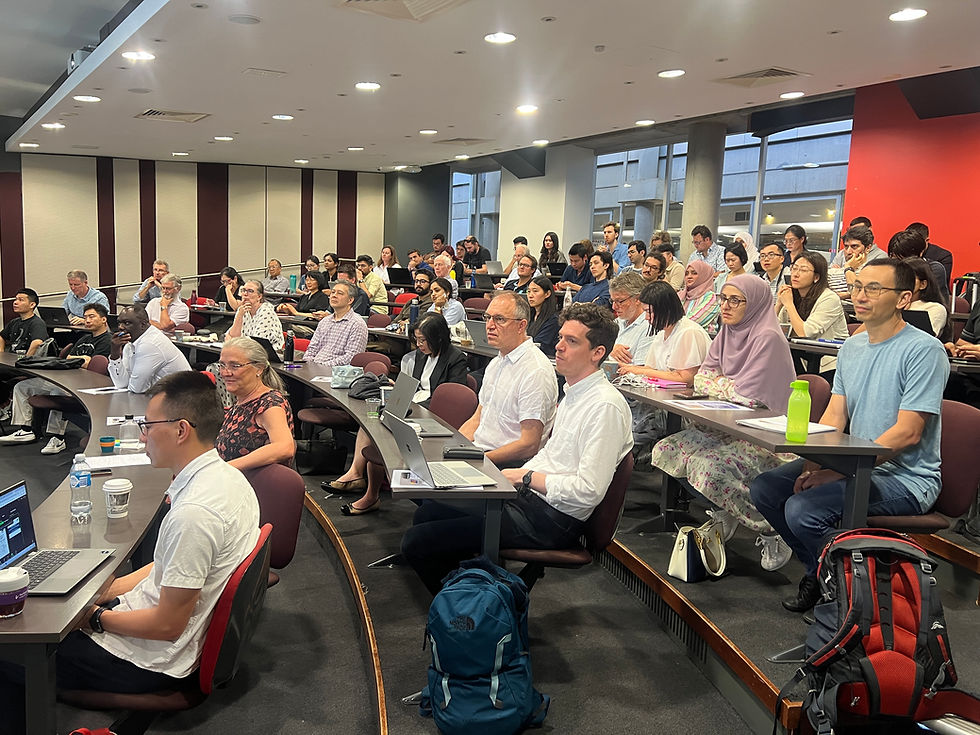
Program Lead, Professor Kylie Catchpole (ANU), who took over the role from Professor Renate Egan earlier in the year, gave an update on some recent activities and outlined the focus and direction of the Program, at the 2025 ACAP Conference in December.

A fast‑moving technology in a slow‑moving system
Professor Catchpole explained three major challenges:
1. Technology, market and industry are moving very fast
In coming decades, Australia will need several times the current electricity demand. Solar and batteries are scaling rapidly, with costs falling as deployment grows. At the same time, transmission, planning and large‑scale infrastructure move much more slowly.
Prof. Catchpole said this speed mismatch will shape what our future renewable system will actually look like. Systems are likely to end up with more solar and somewhat less wind than simple LCOE comparisons suggest. While generation technology, particularly solar, improves in cost and performance with increased deployment, transmission system build times and costs trend to increased delays and cost.
PV Futures asks: What does a highly renewable system look like when you account for these dynamics, not just static costs?
2. Policy and regulation are not keeping up with technology
While the technology is racing ahead, regulatory frameworks and planning processes often lag behind, making it harder to fully capture the benefits of ultra‑low cost PV and storage.
3. Economy‑wide implications need attention
Ultra‑low cost solar affects not just electricity, but the broader economy – from regional jobs and industry structure to exports, storage, and transmission planning. These system‑wide impacts need dedicated analysis and enhanced knowledge sharing, particularly with and for affected communities.
PV Futures: Opportunities for ACAP
ACAP is already recognised globally for world‑leading PV research, creating important opportunities, including:
Growing industry engagement – Industry partners are increasingly looking to ACAP not just for device innovation, but for guidance on how technology trends, reliability and costs feed into future markets and systems.
Dedicated resourcing for analysis, road mapping and strategy – The PV Futures program is building capacity to provide structured analysis and narratives in three focus areas:
· technology change and the role/value of R&D
· industry and economy‑wide change in Australia with ultra‑low cost solar
· international trends in technology, markets and investment, and Australia’s role.
Mapping the best locations for solar and wind – and the benefits to communities, and the grid
Professor Catchpole introduced ACAP-supported work at ANU mapping ultra‑low‑cost solar opportunities.
• Spatial LCOE mapping
Calculating levelised cost of electricity (LCOE) per grid‑connected “pixel” across Australia, incorporating resource quality (solar/wind) and grid connection. This identifies where it is cheapest to build solar and wind, and makes such data public so that local communities, as well as developers, can see the opportunities.
• Community‑level benefits
From these maps, the team can inform investment flows, jobs and economic opportunities for regional and rural communities. This helps locals see tangible benefits from hosting large PV and RE projects, beyond abstract climate goals.
• Grid planning with massive RE build‑out
Looking beyond AEMO’s near‑term planning to consider much higher levels of solar/wind; and exploring the best spots in Australia to build new powerlines and unlock vast amounts of low-cost solar and wind power. This helps to understand what kind of grid is needed for multi‑times‑current electricity demand.
Storage and low‑cost electricity
Prof. Catchpole explained that, in addition to ultra-low cost solar modules, we need to ensure low‑cost electricity at system level. This means large scale, low cost storage is essential to match PV with demand. Batteries provide shorter‑term storage, and pumped hydro provides longer durations (beyond ~8 hours).
Prof. Catchpole noted that Snowy 2.0 will have about 5 × more storage than all other storage in Australia combined, and its capital cost per unit of storage is about 5 × lower than batteries.
Knowledge sharing in practice
ACAP leads on communicating local and global research progress to industry, other groups, policymakers and the broader community through a high level of engagement at tradeshows, media and contributions to policy.
In addition, ACAP research and members are very active and visible at all major solar conferences, both nationally and internationally, including many invited plenary presentations. ACAP also continues to support key Australian PV research conferences the Asia Pacific Solar Research Conference and the Australasian Community for Advanced Organic Semiconductors (AUCAOS) Symposium.
Expanded, consistent production of public-facing news explaining ACAP's goals and achievements
Professor Catchpole highlighted the consistent pipeline of high quality news and feature content being published on the ACAP website and LinkedIn, showcasing the diversity, impact and breadth of ACAP’s programs, people and partnerships. The stories and publications make the connection between our leading Australian PV research outcomes and industry and policy needs; they build the broader public conversation about the role of solar (and Australia) in a highly renewable future.
In May 2025, ACAP’s latest public dissemination report Setting the Pace was released, unveiling the depth of collaboration, leadership and innovation driving progress across all of ACAP’s research programs.
Recognition of leadership in Australian PV research
Professor Catchpole highlighted how Australian PV research is globally recognised, with recent honours including:
• Martin Green – a Sydney ferry named after him; awarded the Faraday Medal
• Dan Macdonald – plenary speaker at IEEE PVSC, reflecting long‑term industry–research partnerships on efficiency gains
• Anita Ho‑Baillie – Eureka Prize for Sustainability for work on stability
• Heping Shen – Wenham Young Professionals Award, honouring Stuart Wenham’s legacy.
• Andrew Blakers – Order of Australia for contributions to photovoltaics and energy systems.
These reflect a decades‑long, community‑wide contribution that underpins PV Futures.
The PV Futures and Knowledge Sharing Program is ensuring that ACAP’s technical advances are matched with clear, system‑level insights and accessible public/industry communication about the immense potential ultra-low cost solar offers for Australia.


Comments